
bathroom faucets are repeatedly exposed to water, humidity, soap, skin-care products, cleaning chemicals, and mineral deposits.
A faucet may develop dull areas, green or white residue, rust-colored marks, peeling plating, or small pits. These changes do not all have the same cause. Some are removable deposits, while others indicate that the protective finish or underlying metal has been damaged.
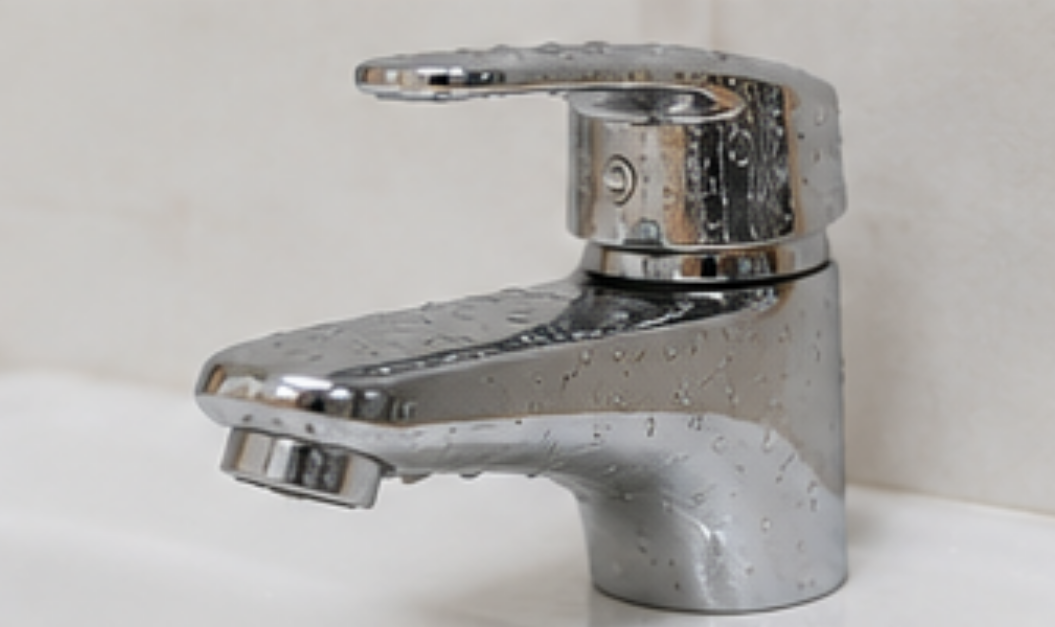
Hard water contains dissolved minerals that remain after droplets evaporate.
White or chalky buildup around the aerator, handle base, and spout is often mineral residue rather than deterioration of the metal.
Clean a small area with a product approved for the faucet finish.
When the mark disappears and the surface beneath remains smooth, it was probably a deposit. A rough pit, peeling layer, or permanently discolored spot may indicate material or coating damage.
The corrosion risk changes with the water’s chloride level, pH, temperature, dissolved oxygen, and other chemical conditions.
Water that is unusually acidic or contains high chloride levels may be more aggressive toward certain metals and finishes.
Water remaining around joints, aerators, and handle bases can concentrate minerals and cleaning residue as it evaporates.
Drying the faucet after use reduces long-term surface buildup.
Acidic bathroom cleaners, bleach, chlorine products, abrasive powders, and strong descalers may attack plated or coated faucet surfaces.
Even a cleaner that is suitable for ceramic tile may be unsuitable for chrome, brushed nickel, matte black, gold-tone, or PVD faucet finishes.
Cleaner may collect inside seams and remain there longer than intended.
Apply a suitable product to a soft cloth instead of spraying it heavily over the complete faucet. Rinse and dry the surface after cleaning.
Steel wool, rough scouring pads, hard brushes, and metal scrapers can scratch the finish.
Once the protective surface is damaged, moisture can reach the base material more easily.
For daily cleaning, use warm water, mild neutral detergent, and a soft microfiber cloth.
Follow the grain direction on brushed finishes and avoid repeated polishing of one small area.
When dissimilar metals remain in electrical contact in the presence of water, one material may corrode more quickly.
This can occur around unsuitable connectors, mounting hardware, or plumbing components.
Correct material pairing and approved fittings help reduce this risk.
Steam and poor ventilation can keep faucet surfaces damp for long periods.
Improve bathroom airflow and repair leaks that leave water around the faucet base.
Persistent moisture beneath the faucet may also damage the countertop or cabinet before severe corrosion becomes visible on the fixture.
Many faucets use a brass or other metal body covered by one or more finishing layers.
The final appearance depends on surface preparation, polishing, plating thickness, coating adhesion, curing, handling, and packaging.
A visually attractive finish can still fail early when the underlying surface is contaminated or the coating is damaged during installation.
A Brass Bathroom Faucet uses brass for important body or waterway components, while handles, decorative covers, and accessories may use other materials depending on the design.
Buyers should confirm:
| Specification | Why It Matters |
|---|---|
| Body material | Influences structure and waterway performance |
| Cartridge type | Affects operation and maintenance |
| Finish process | Influences appearance and surface resistance |
| Water standard | Determines connection compatibility |
| Aerator | Affects flow pattern and user experience |
| Packaging | Protects the finish during transport |
We supply Basin Faucets, bathtub faucets, shower products, and related bathroom hardware for different markets.
Customers can discuss chrome, brushed, matte, dark, and decorative finishes according to the project style. Samples should be reviewed under the intended lighting and tested with the local cleaning procedure before final approval.
Developing faucets for apartments, hotels, bathroom showrooms, distributors, or private-label collections?
Send us the product style, material requirements, finish reference, connection standard, cartridge specification, flow target, packaging, and quantity. We will prepare a Brass Bathroom Faucet proposal for evaluation.
Previous: When To Drip Faucets in Winter?

 Mobile Phone:
 Phone:
 Contact Now
 WeChat