
Dripping a faucet may help protect certain vulnerable water pipes during freezing weather, but it is not necessary in every building or every cold night.
The method is most relevant when pipes run through unheated spaces, exterior walls, attics, crawl spaces, garages, or cabinets with limited warm-air circulation.
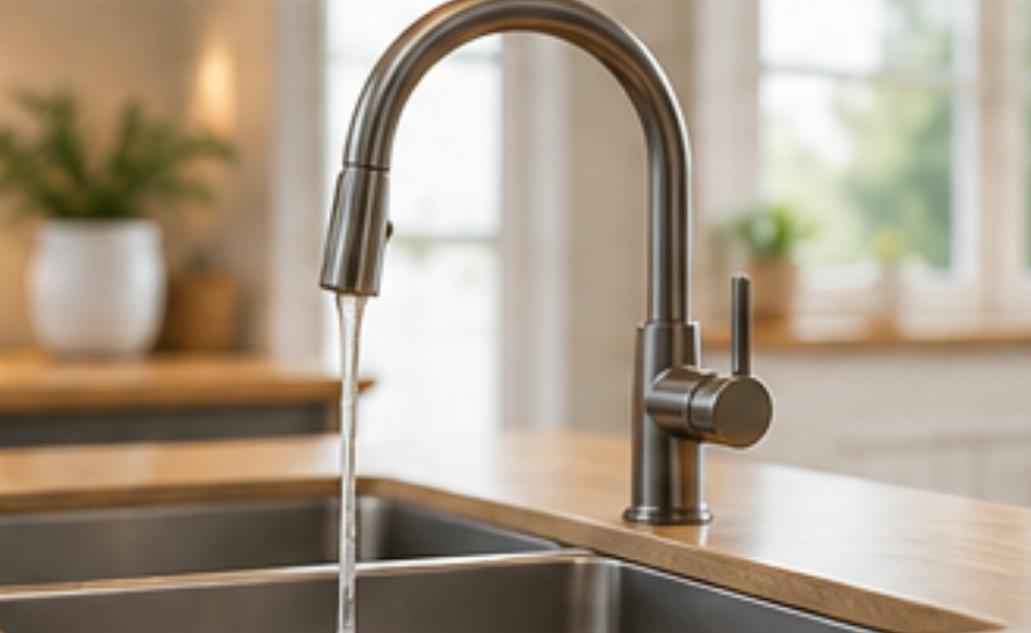
A small continuous flow can reduce pressure buildup if ice begins forming. It does not guarantee that the pipe will remain completely unfrozen.
Consider dripping an indoor faucet when several risk factors are present.
A brief temperature drop may not affect well-insulated plumbing.
Risk increases when outdoor temperatures remain below freezing for several hours, especially during severe cold or strong wind.
A history of freezing is one of the clearest signs that the pipe is vulnerable.
The long-term solution should include insulation, draft sealing, pipe relocation, or professional plumbing changes rather than relying on dripping every winter.
Pipes in crawl spaces, exterior walls, garages, attics, and poorly insulated cabinets lose heat faster than pipes located inside conditioned rooms.
Water utilities and building managers may issue cold-weather instructions based on local construction and expected temperatures.
Follow those instructions because climate, building design, and water systems vary by region.
Use the faucet connected to the vulnerable pipe, preferably the fixture farthest from where the water supply enters the building.
When both hot and cold lines are exposed, open both sides slightly or position a single-handle mixer so a small amount flows from each supply.
Unnecessary dripping wastes water and may overload private wastewater systems in some locations.
Identify the pipes at risk rather than leaving every fixture running.
A slow, continuous trickle is generally more useful than an occasional isolated drop.
The stream does not need to be large. The objective is to maintain movement and reduce pressure buildup.
Place the water directly into an open drain and confirm that the drain itself is not frozen or blocked.
Open vanity and kitchen cabinet doors so warm indoor air can reach plumbing beneath sinks.
Remove household chemicals and unsafe items first when children or pets are present.
Maintain indoor heat throughout the cold period, including overnight and when the building is temporarily unoccupied.
Reducing the thermostat excessively can allow wall cavities and utility areas to become much colder than the center of the room.
Cold air entering through gaps can freeze a pipe even when the room temperature seems acceptable.
Inspect openings around:
Exterior walls
Utility penetrations
Crawl-space vents
Basement windows
Sink cabinets
Pipe chases
Garage walls
Use building materials appropriate for the location and maintain required ventilation and fire separation.
Outdoor faucets are normally winterized by disconnecting hoses, shutting off the interior supply when available, and draining the pipe.
Leaving an exterior faucet dripping is not a substitute for correct winterization and may create ice around the wall, walkway, or drain area.
If water stops flowing during freezing weather, keep the faucet open and warm the accessible pipe gradually.
Use safe heat sources such as warm air or warm towels. Never use an open flame, torch, or uncontrolled high-temperature device.
A frozen pipe may split without leaking until the ice melts.
Know how to shut off the main water supply and inspect walls, ceilings, cabinets, and floors as the pipe warms.
Contact a plumber when the frozen section is inaccessible or damage is suspected.
A faucet cannot prevent an exposed supply pipe from freezing.
However, accurate valve operation, reliable seals, compatible connections, and serviceable internal parts support controlled water flow and routine maintenance.
As a bathroom faucet Manufacturer, our team can review faucet structure, cartridge selection, materials, finishes, connection standards, and packaging for different project markets.
Cold-climate projects should evaluate more than the visible faucet design.
Buyers should also consider:
Pipe insulation
Valve accessibility
Local connection standards
Installation depth
Maintenance access
Building heating
Outdoor faucet winterization
Replacement-part availability
Sourcing basin, bathtub, shower, or project faucets for distribution and construction markets?
Provide your target product category, connection standard, body material, finish, cartridge, flow requirement, packaging, and expected volume. Our team will prepare a proposal from an experienced Bathroom faucet manufacturer.

 Mobile Phone:
 Phone:
 Contact Now
 WeChat