
Changing a kitchen faucet sounds like a small job, but in real projects it often affects installation time, after-sales issues, user experience, and even repeat orders. Many buyers start with the practical question of how to change kitchen faucet, but what they really need is a replacement solution that fits the sink, installs without trouble, and feels better in daily use. That is where a Pull-down kitchen faucet becomes relevant. Instead of only replacing an old tap with another standard model, it gives the kitchen a more flexible working range and a more modern sink setup.
A lot of old faucets are replaced for simple reasons. Some leak. Some become stiff after long use. Some still work, but the spout is too short, the sink is hard to rinse, and daily washing feels inefficient. In retail, that may be an inconvenience. In project supply or distribution, it becomes a product issue. Buyers do not just want a faucet that can be installed. They want one that reduces complaints after installation. That is why replacement articles should not stop at tools and steps. The better topic is how to change kitchen faucet in a way that actually improves the kitchen.
Before touching the old faucet, it is worth asking whether the new one solves the same problems that caused the replacement in the first place. A basic fixed faucet may fit the hole and connect to the pipe, but that does not always make it the right upgrade. In many kitchens, the real issue is limited movement. The user cannot easily rinse large pots, wash vegetables in different corners of the sink, or clean the basin without awkward hand positions.
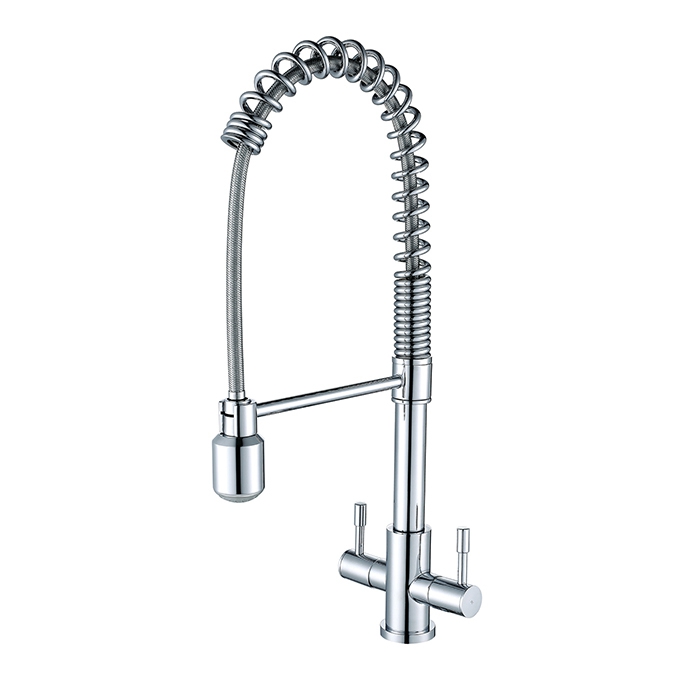
A pull-down model answers those problems more directly. The spray head extends into the sink area, the spout usually gives more working height, and the switch between stream and spray makes normal kitchen tasks feel smoother. For importers and wholesalers, that matters because the product becomes easier to sell on use value, not only appearance. For contractors and project buyers, it matters because better usability often means fewer complaints once the job is finished.
If you want to know how to change kitchen faucet properly, the first step is not removal. It is checking fit. Start with the sink opening, the mounting area, the space under the counter, and the water line position. Many installation problems come from choosing a new faucet that looks right in photos but does not suit the actual sink layout.
Under-sink space is especially important for pull-down models. The hose needs enough room to move freely. If it rubs against stored items, shut-off valves, or cabinet panels, the faucet may still work, but the user experience will feel poor from the first week. This is one detail that experienced buyers usually care about more than first-time buyers. A faucet should not only fit the countertop. It should work cleanly in the cabinet space below it.
Connection size is another point that should be checked early. Standard fittings help replacement work move faster and reduce installation uncertainty. For B-end customers, this matters because installation complaints often come from small mismatches that could have been avoided before purchase.
The removal process is usually straightforward, but it should be done in the right order. Shut off the hot and cold water first. Then open the faucet to release any remaining pressure. After that, disconnect the supply lines and place a cloth or shallow container under the sink because leftover water almost always remains inside the lines.
The mounting hardware is usually the slowest part, especially in older kitchens. Corrosion, hard water scale, and tight working space can all make removal more difficult than expected. This is one reason many buyers now prefer replacement products that are easier to install and easier to service later. A kitchen faucet should not become a hidden maintenance problem after it goes into the sink.
Once the old unit is removed, clean the sink deck carefully. Any old sealant, dirt, or residue around the mounting hole can affect how well the new faucet sits. Even a good faucet can look poorly installed if the base area is not clean and level.
When installing the new faucet, alignment matters more than speed. Place the body carefully, make sure the base sits evenly, and secure it from below without over-tightening. Then connect the water lines and test the joints before putting items back under the sink. A clean installation is not only about preventing leaks. It also affects the look of the sink area and how stable the faucet feels in daily use.
For a pull-down kitchen faucet, the hose path should always be checked before the job is considered complete. Pull it out fully, let it return, and make sure nothing blocks its movement. This step is often ignored during quick installations, but it has a direct impact on whether the faucet feels smooth or frustrating after handover.
For project buyers, this is where product design starts to show its value. A faucet that installs neatly, moves smoothly, and feels solid after installation is easier to support in the market. A faucet that only looks good in product photos but causes fitting issues is much harder to manage at scale.
Many articles explain how to change kitchen faucet as if all replacement models are basically the same. They are not. In actual use, a pull-down faucet often feels like a bigger upgrade than buyers expect. It changes how the sink works. The user gains more reach, better washing control, and easier cleanup around the basin.
This is especially helpful in kitchens where the sink handles more than one task in sequence. Washing produce, filling cookware, rinsing plates, and cleaning food residue all require different water angles. A fixed spout handles these tasks, but not always comfortably. A pull-down design gives the user more direct control over the working area. That practical improvement is easier to explain to customers than technical language alone.
For B-end buyers, this also creates stronger product positioning. A standard faucet competes mostly on price and finish. A pull-down faucet has more functional talking points, which makes it easier to sell into renovation projects, rental housing upgrades, modern apartment kitchens, and retail lines that need a visible step up from basic models.
When buyers source kitchen faucets for resale or projects, their concerns go beyond the installation guide. They want to know whether the faucet is easy to fit, whether the moving parts hold up, whether the finish stays presentable, and whether the design solves a real user problem. Returns rarely happen because a faucet was boring. They happen because it leaked early, moved poorly, or felt less practical than expected.
That is why a replacement product should be judged by more than style. The valve, hose, base stability, and water mode switching all matter. For many professional buyers, a faucet is successful when the installer has fewer issues, the end user notices the benefit quickly, and the product keeps performing after months of regular use. In that sense, changing a kitchen faucet is not only a maintenance topic. It is a product selection decision with long-term effects.
One common mistake is choosing a new faucet only by appearance. A clean finish and modern shape help, but they do not guarantee better daily use. Another mistake is ignoring sink proportion. A faucet may be beautiful on its own but still feel awkward if the spout height, reach, or spray movement do not suit the sink.
Another issue appears when buyers underestimate installation details. Under-sink clearance, hose travel, and connector fit may sound minor, but they often decide whether a replacement feels easy or problematic. In larger supply projects, these details matter even more because a small issue repeated across many units quickly becomes an after-sales burden.
A better approach is simple. Match the faucet to the sink type, think about real kitchen tasks, and choose a model that improves use rather than only changing appearance. That is where pull-down designs are often stronger than standard fixed taps.
This topic links naturally to the pull-down kitchen faucet on your site because the product is positioned as a replacement-friendly upgrade rather than just a decorative fixture. It is built around the kind of improvements people usually want when they search how to change kitchen faucet: better sink reach, cleaner spray control, easier daily washing, and a more integrated sink setup. For buyers who want a model that is easier to present to customers and easier to use after installation, that connection is practical and easy to understand.
It also makes sense for buyers who need a product with mainstream compatibility and a supply-oriented positioning. In many markets, the best faucet replacement is not the most complex one. It is the one that installs with less friction and gives the user a clear everyday benefit from the first use.
If you are looking at how to change kitchen faucet, the answer is not only about removing one tap and fitting another. The better replacement should solve old problems, fit the sink correctly, and make the kitchen easier to use every day. That is why a pull-down kitchen faucet is often a more sensible upgrade than a basic fixed model. It improves working reach, supports better rinsing, and gives the sink area a cleaner and more useful layout.
If you are comparing faucet options for distribution, retail, or project supply, and you want help checking fit, structure, or product positioning, you are welcome to contact us. We can help you review the details, answer installation questions, and suggest suitable options based on your market and application needs.
Previous: How Much To Replace A Faucet?

 Mobile Phone:
 Phone:
 Contact Now