
A dripping kitchen faucet may look like a small problem, but it usually gets worse if it is left alone. The constant drip is annoying, it wastes water, and over time it can signal wear inside the faucet body. In many kitchens, the first sign is simple: the handle is turned off, but water still falls from the spout or spray head one drop at a time. Sometimes the dripping is slow and steady. Sometimes it only appears after the faucet has been used for a while. Either way, it usually means one or more internal parts are no longer sealing properly.
For many homeowners and product buyers, learning how to fix a dripping kitchen faucet starts with understanding where the leak is coming from. A drip from the spout is different from a leak at the base. Water around the handle is different from water coming from the pull-out hose area. Once the source is clear, the repair becomes much easier to judge. In some cases, a simple cartridge change solves the problem. In other cases, the faucet has reached the point where replacing the full unit is the better option.
A kitchen faucet usually drips because one of the sealing parts inside has worn down. In single-handle faucets, the cartridge is often the first place to check. The cartridge controls water flow and temperature, and once it begins to wear, the faucet may no longer shut off completely. Even a small amount of internal wear can allow water to keep slipping through.
Another possible cause is a damaged O-ring or seal. These parts help prevent water from escaping at connection points, and over time they can harden, crack, or shift out of place. In kitchens with frequent daily use, this kind of wear is normal. Mineral buildup can also make the problem worse. If scale collects inside the faucet, it may affect how smoothly the internal parts close.
Pull-out kitchen faucets need a little more attention because they include extra moving components. The spray head, hose connection, and retraction system all work together. If the faucet drips from the spray outlet or leaks near the hose joint, the issue may not only be the cartridge. It may also involve the connector, the spray head assembly, or a worn seal inside the pull-out section.
Before taking anything apart, it helps to watch the faucet carefully for a minute or two. If water drips only from the spout after the handle is fully closed, the cartridge is the most likely cause. If water appears around the handle when the faucet is turned on, the sealing parts near the stem may be worn. If water collects at the base, the body seal or mounting area may be the issue. If the spray head continues to drip after use, the pull-out head or diverter section may be involved.
This step matters because not every leak should be fixed in the same way. A drip at the outlet is usually an internal shut-off problem. A leak under the sink may come from the hose line rather than the faucet body. A pull-out faucet may also show symptoms only when the spray head is extended, which points more clearly to hose movement or connector wear.
Once you know where the water is coming from, the repair path becomes more accurate and you avoid replacing the wrong part.
Fixing a dripping kitchen faucet is usually not complicated, but a little preparation makes the work much smoother. The first step is always to turn off the water supply valves under the sink. After that, open the faucet to release the remaining pressure and let any trapped water drain out. This prevents surprise leaks once the handle or cartridge is removed.
You will usually need an adjustable wrench, a screwdriver, a clean cloth, and a small container to hold removed parts. If the faucet has a decorative cap on the handle, a flat tool may be needed to lift it carefully. It is also useful to keep the replacement parts ready before disassembly, especially if you already know the faucet model or cartridge size.
For pull-out kitchen faucets, it is a good idea to clear the space under the sink first. The hose, counterweight, and supply lines need room to move, and crowded storage can make inspection harder. A neat workspace often saves more time than people expect.
If the faucet drips from the main spout after being turned off, the cartridge is often the main reason. Start by removing the handle. Most Single-handle kitchen faucets have a small screw hidden under a cap or behind the lever. Once the handle is removed, the top cover and retaining parts can be loosened to access the cartridge.
After taking out the cartridge, inspect it closely. If it looks worn, cracked, stiff, or scaled, replacement is usually the better option than trying to clean and reuse it. Once the new cartridge is installed, make sure it is aligned correctly in the valve body. A poor fit can create the same dripping problem again even with a new part.
This type of repair is common on modern kitchen faucets because the cartridge handles most of the internal control. In a well-made faucet with a solid brass body, the outer structure may remain in good condition for years, while the cartridge is the part that needs attention first. That is one reason why durable body material still matters. A stronger main body makes part replacement more worthwhile.
When water appears around the handle, the issue usually comes from the sealing parts inside or near the control section. Once the handle is removed, the area around the stem can be checked for worn rings or loose fittings. Replacing the damaged seal often solves the problem without needing a full faucet replacement.
A leak around the base is different. If water pools where the faucet meets the sink, the seal at the mounting area may be failing, or the water may be traveling down from a higher point and collecting there. Dry the area completely, run the faucet, and observe where the moisture first appears. This helps separate a true base leak from a leak higher up the body.
With pull-out models, water near the base may also be related to the moving hose inside the faucet body. If the hose is worn or the connector is not tight, water may escape during use and show up around the mounting area. In this case, the repair needs to focus on the hose path rather than only the external base.
A pull-out spray head adds flexibility in daily kitchen work, but it also introduces extra points where wear can develop. If the spray head keeps dripping after the water is turned off, the first thing to check is still the main cartridge. The faucet may not be closing fully, and the leftover water appears at the spray outlet.
If the spray head itself leaks during use or drips irregularly after mode switching, the issue may be in the spray head assembly. Mineral deposits, worn internal seals, or a weak switch mechanism can all affect performance. In some cases, cleaning the spray head and flushing debris helps. In other cases, replacing the head is the cleaner solution.
For kitchens that use the faucet heavily every day, a pull-out model with a stable hose connection and solid internal waterway structure usually performs better over time. Smooth retraction and secure sealing matter because the spray head is handled more often than a fixed spout. When those parts stay stable, small dripping issues are easier to control before they turn into full leaks.
Not every dripping kitchen faucet should be repaired repeatedly. If the faucet body is still strong, the finish is in acceptable condition, and the leak clearly comes from a replaceable internal part, repair is usually worthwhile. A cartridge change or seal replacement can restore normal use without major cost.
But if the faucet has already developed multiple issues, such as weak handle movement, visible corrosion, repeated leaks, or a worn pull-out hose, replacement may be the better decision. This is especially true in kitchens where the faucet is used frequently for rinsing, filling, and cleaning larger cookware. In that kind of environment, a faucet with better material strength and a more practical spray structure often improves the whole sink area rather than only removing the drip.
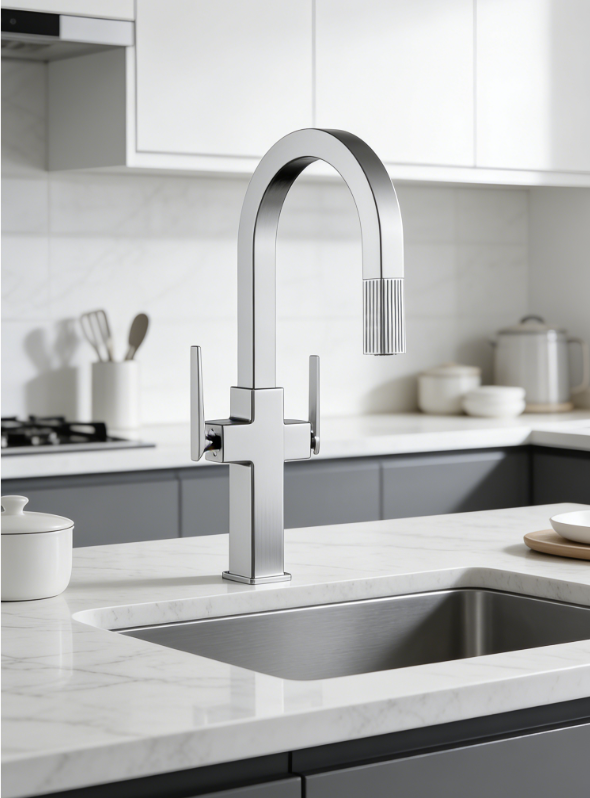
A modern pull-out kitchen faucet with a brass body, smooth single-handle control, and flexible spray head is often chosen not only because it looks cleaner, but because it handles everyday kitchen movement more effectively. For many users, replacing an aging faucet becomes both a repair decision and a functional upgrade.
Once the faucet is repaired, a few habits can help extend its working life. Avoid forcing the handle closed with excessive pressure. Modern faucets do not need to be tightened hard to stop water flow. Clean the aerator and spray outlet regularly so mineral buildup does not affect water pressure and internal performance. If the local water supply is hard, occasional cleaning becomes even more important.
It also helps to check the pull-out hose movement from time to time. The hose should extend and retract smoothly without catching on stored items under the sink. If the hose rubs against sharp edges or gets blocked by cleaning supplies, long-term wear can develop faster.
Good product selection also reduces future maintenance. A faucet with a durable brass construction and reliable internal components is usually easier to keep in service over time than a lighter model that begins wearing out early. In practical use, repair success is not only about technique. It also depends on whether the faucet itself was built for long-term daily work.
If you want to know how to fix a dripping kitchen faucet, the key is to identify the leak correctly before doing anything else. A drip from the spout usually points to the cartridge. Water near the handle or base often suggests a seal issue. In pull-out kitchen faucets, the spray head and hose connection should also be checked because they are used more actively in daily cleaning.
Most minor dripping problems can be fixed with the right replacement part and careful installation. But if the faucet has become unreliable in several areas, replacing it with a stronger and more functional model is often the smarter long-term choice.
If you are comparing kitchen faucet options or are not sure whether your current unit should be repaired or replaced, feel free to contact us. We can help you review the issue, suggest a suitable product direction, and provide practical support for home projects or bulk purchasing plans.
Previous: How To Change Kitchen Faucet?

 Mobile Phone:
 Phone:
 Contact Now
 WeChat