

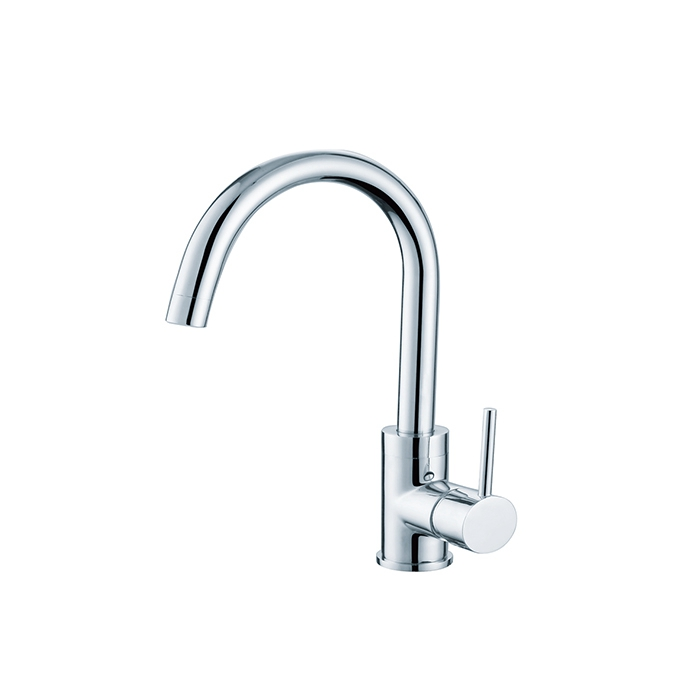
single handle Chrome kitchen faucet products are often selected for retail channels, apartment renovations, hotel rooms, rental properties, and kitchen project supply because they are simple to operate and easy to match with different sink styles. For distributors and project buyers, however, the real procurement risk is not only whether the faucet looks bright when the sample arrives. The more important question is whether the chrome surface, cartridge, body material, and accessories can remain stable after months of daily use.
Corrosion complaints usually appear after installation. A faucet may pass visual inspection at first, but after exposure to water, humidity, cleaning chemicals, and frequent hand contact, small rust spots, discoloration, peeling, or dull chrome areas may appear. When this happens, the complaint does not only affect one product. It can affect the trust between distributors, retailers, contractors, and end users.
Chrome kitchen faucets usually look clean and attractive when they are new. This makes many buyers focus on surface brightness, handle movement, and packaging during sample approval. However, real kitchen environments are more complicated than showroom conditions.
In humid markets, moisture can remain around the faucet base, handle joint, spout connection, or mounting area. In hard water areas, mineral deposits may stay on the surface if users do not clean the faucet regularly. In hotels, apartments, and commercial kitchens, cleaning staff may use strong detergents or abrasive cloths. These factors can expose weak surface treatment quickly.
For distributors, this means the risk is delayed. The shipment may look acceptable when it arrives, but complaints may start weeks or months later. By that time, the faucets may already be installed across many rooms, kitchens, or retail customers.
Corrosion complaints are difficult for distributors because they move through several layers. The end user complains to the retailer or contractor. The retailer then contacts the distributor. The distributor needs to check whether the issue is caused by material quality, plating process, installation environment, cleaning method, or misuse.
Even if only a small percentage of products have corrosion issues, the after-sales work can be heavy. Replacement units, spare parts, return shipping, warranty communication, and customer explanation all increase cost. More importantly, repeated complaints can make downstream buyers lose confidence.
A retailer may stop recommending the model. A project contractor may avoid using the same faucet in future projects. A hotel buyer may request alternative products before the next procurement cycle. This is why corrosion control is not only a product quality issue. It is a long-term business issue.
Many buyers only inspect the main visible surface of a chrome faucet. In real use, corrosion often starts from less obvious areas. These include the bottom edge, handle base, spout joint, aerator area, thread connection, mounting kit, and other positions where water or cleaning residue may remain.
During pre-shipment inspection, buyers should check the faucet under different light angles. Scratches, uneven plating, color difference, dark spots, peeling edges, and dull areas should be reviewed carefully. If the surface finish is inconsistent before installation, the risk of later complaints is higher.
For bulk orders, approved samples should be kept as reference. Future batches can then be compared against the original standard. This helps buyers identify plating changes, color differences, or finishing problems before the products enter the market.
A Single Handle Chrome Kitchen Faucet is not only a chrome-plated body. The cartridge, aerator, flexible hose, mounting accessories, washers, and screws all influence long-term performance. Sometimes corrosion complaints begin from small accessories rather than the faucet body itself.
If screws rust, if mounting parts discolor, or if the aerator area develops stains, customers may still consider the whole faucet poor quality. For distributors, this means inspection should include the complete product set.
Buyers should confirm whether the body material, cartridge configuration, plated finish, hoses, and accessory kits remain consistent across batches. When different components are changed frequently to reduce cost, the same faucet model may perform differently in the market.
Some corrosion complaints are related to daily maintenance. Chrome surfaces should not be cleaned with harsh chemicals, rough pads, or strong acidic cleaners. However, many end users do not know this unless instructions are provided clearly.
For retail channels, product packaging should include basic care guidance. For hotel projects, maintenance information can be shared with cleaning teams. For apartment or rental property projects, contractors may need to tell property managers how to clean the faucet surface properly.
Clear cleaning instructions cannot replace good product quality, but they can reduce avoidable complaints. They also help distributors explain proper use when after-sales questions appear.
Before confirming a chrome faucet bulk order, buyers should review both product specifications and real use conditions. Important points include finish requirement, body material, cartridge type, water flow, mounting accessories, packaging protection, carton labeling, and target market environment.
If the product will be used in coastal regions, humid areas, hotels, apartments, or commercial kitchens, buyers should explain this before production. The supplier can then help review whether the selected finish, components, and packing method are suitable for the application.
A practical inspection checklist may include:
Chrome surface uniformity
Handle movement
Cartridge operation
Aerator condition
Hose and connector quality
Mounting kit completeness
Accessory corrosion resistance
Packaging protection
Carton mark accuracy
Sample comparison with approved standard
For distributors, stable quality is more valuable than a one-time low price. A cheaper faucet may reduce purchase cost at first, but if corrosion complaints increase, the distributor may lose more through returns, replacements, warehouse handling, and damaged channel relationships.
Long-term buyers should build clear quality standards with the factory. This includes approved samples, surface finish requirements, component confirmation, inspection process, and packaging standards. These details help reduce uncertainty across repeated orders.
When product performance remains stable, retailers and project buyers are more willing to reorder. Fewer complaints also make the distributor’s sales team more confident when promoting the product.
Corrosion complaints can damage more than the appearance of a single handle chrome kitchen faucet. They can affect distributor reputation, retailer confidence, project acceptance, and repeat orders. Buyers should not only check whether the faucet looks good when new. They should also review surface treatment, component consistency, accessory quality, cleaning guidance, and inspection control before shipment.
For long-term distribution and project supply, corrosion prevention should be managed before the order leaves the factory, not after complaints appear in the market.
For wholesale supply, project procurement, or private label faucet orders, you can send us your required quantity, finish requirements, cartridge type, flow rate needs, installation environment, packaging method, destination market, and delivery schedule.
Our team can help review product specifications, discuss sample testing, confirm accessory configuration, and prepare a quotation based on your purchasing plan. If your market has high humidity, hard water, coastal conditions, hotel project usage, or rental property applications, you can also share these details with us so we can recommend a more suitable faucet option before order confirmation.
For Single Handle Chrome Kitchen Faucet bulk orders, sample requests, project quotations, or long-term distributor cooperation, visit https://www.kphaojiajia.com and send us your inquiry details.

 Mobile Phone:
 Phone:
 Contact Now
 WeChat