
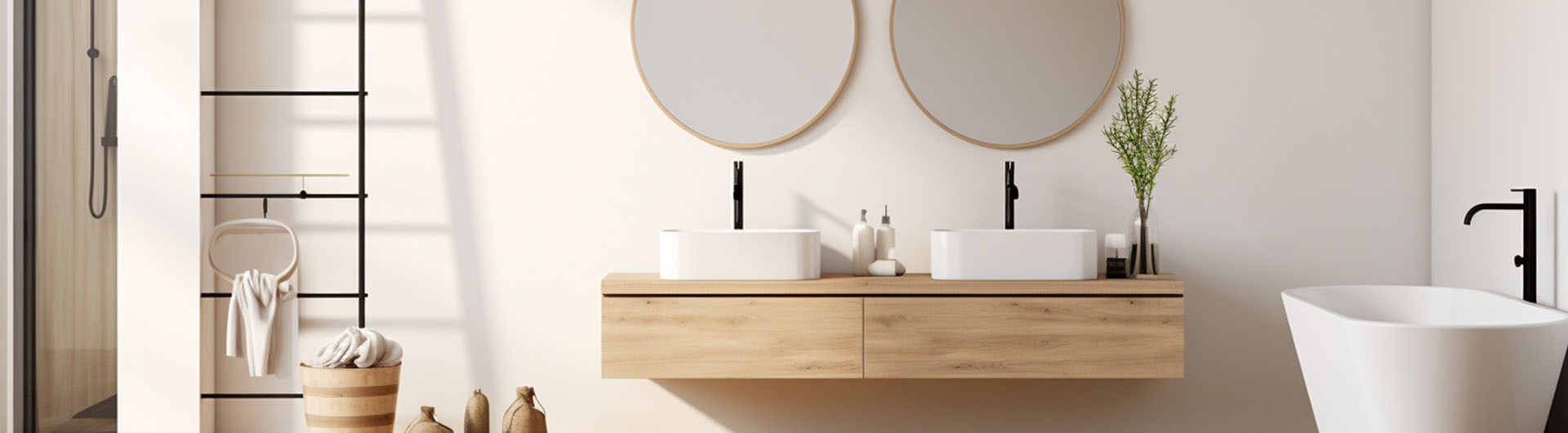
When people talk about the four types of faucets, they are usually referring to the four main internal valve systems used to control water flow. These are compression faucets, ball faucets, cartridge faucets, and ceramic disc faucets. Although many buyers first notice the appearance or finish of a faucet, the internal structure is what truly determines how the faucet performs during daily use.
The valve type affects how smoothly the handle moves, how accurately temperature can be adjusted, and how resistant the faucet is to dripping or wear. For homeowners, contractors, and bathroom product distributors, understanding these four faucet types makes it easier to choose the right faucet for different bathrooms and market needs.
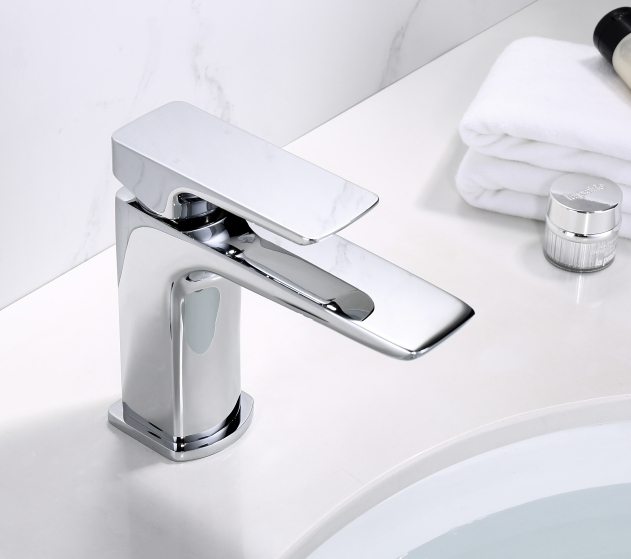
At a glance, most faucets appear similar. They include a spout, a handle, and a polished body designed to match the bathroom environment. However, the internal control system is what determines how the faucet works.
Some faucet types rely on older mechanical sealing methods, while others use modern valve structures that provide smoother control and longer service life. These internal differences influence the user experience. A faucet with a well-designed valve system can provide easier temperature adjustment, more stable water flow, and less risk of leakage over time.
For this reason, faucet buyers often evaluate both external design and internal valve type when selecting products for residential bathrooms, hotels, or commercial projects.
Compression faucets are considered the most traditional faucet design. They typically use two separate handles, one for hot water and one for cold water. Inside the faucet, a rubber washer presses against a valve seat to stop the flow of water. When the handle is tightened, the washer seals the water outlet.
This design is simple and widely recognized, which is why compression faucets were common in older homes and traditional plumbing systems. However, because the washer repeatedly presses against the valve seat, it gradually wears down with regular use. Once this happens, the faucet may begin to drip and require maintenance.
Although compression faucets still appear in certain replacement installations, many modern bathrooms prefer newer faucet types that offer smoother operation and less maintenance.
Ball faucets are commonly found in single-handle faucet designs. Instead of a washer seal, they use a rotating metal or plastic ball inside the faucet body. This ball contains small openings that control both water flow and temperature mixing.
The main advantage of a ball faucet is convenience. A single handle controls both hot and cold water, allowing users to adjust temperature quickly. This made ball faucets a popular step forward from traditional two-handle designs.
However, ball faucets contain multiple small internal components, including springs and seals. Because of this complexity, maintenance may be slightly more involved compared with some newer faucet systems.
Cartridge faucets are widely used in modern bathrooms because they provide smooth operation and reliable water control. Inside the faucet, a cartridge mechanism regulates water flow and temperature. These faucets can appear in both single-handle and double-handle designs, although single-handle cartridge faucets are especially common in basin applications.
The cartridge structure allows the handle to move smoothly while maintaining consistent water flow. This design is easier to control than older compression faucets and often requires less maintenance. Because of this balance of convenience and durability, cartridge faucets are frequently used in residential bathrooms, hotels, and modern wash areas.
Many contemporary Basin Faucets use this structure because it supports compact designs and simple operation. In low-profile bathroom sinks, a single-handle cartridge faucet offers both a clean appearance and comfortable daily use.
Ceramic disc faucets are often considered one of the most durable faucet types available today. They use two ceramic discs inside the valve. When the handle moves, the discs slide against each other to regulate water flow and temperature.
Ceramic is extremely hard and resistant to wear, which allows the valve to create a tight seal. This helps reduce dripping and improves long-term reliability. The handle movement is usually smooth and precise, which adds to the overall quality feel of the faucet.
Because of these advantages, ceramic disc faucets are often used in higher-end bathroom and kitchen installations. They are designed for long service life and stable performance, making them a popular option in modern faucet manufacturing.
Each of the four faucet types has its own advantages. Compression faucets are simple but may require more maintenance. Ball faucets introduced convenient single-handle operation but contain more internal parts. Cartridge faucets offer balanced performance and are widely used in modern basin faucets. Ceramic disc faucets provide excellent durability and smooth control.
For most contemporary bathrooms, cartridge and ceramic disc faucets are the most practical choices. They support modern design styles while offering stable performance and easier daily operation.
The four main faucet types are compression faucets, ball faucets, cartridge faucets, and ceramic disc faucets. Each type controls water flow in a different way and offers different levels of durability, convenience, and maintenance.
When selecting a bathroom faucet, understanding the internal valve structure helps buyers choose products that deliver better performance and longer service life. For modern basin installations, cartridge-based faucets are often a practical option because they combine smooth operation with compact design.
If you are looking for the right basin faucet style for your market or project, feel free to contact us for more product information. Our team can help you evaluate faucet designs, configurations, and finishes to find a solution that matches your bathroom collection and customer demand.

 Mobile Phone:
 Phone:
 Contact Now