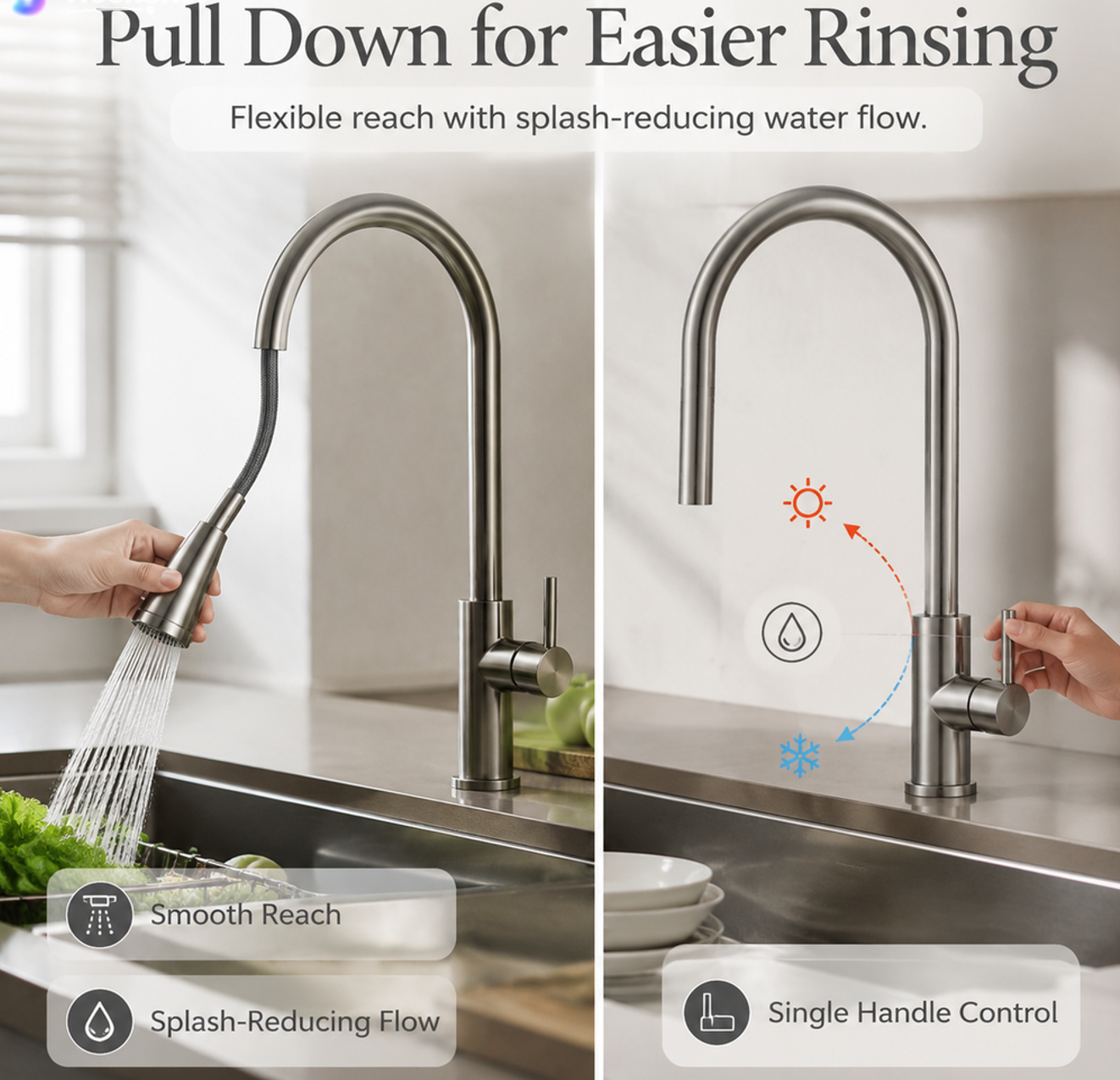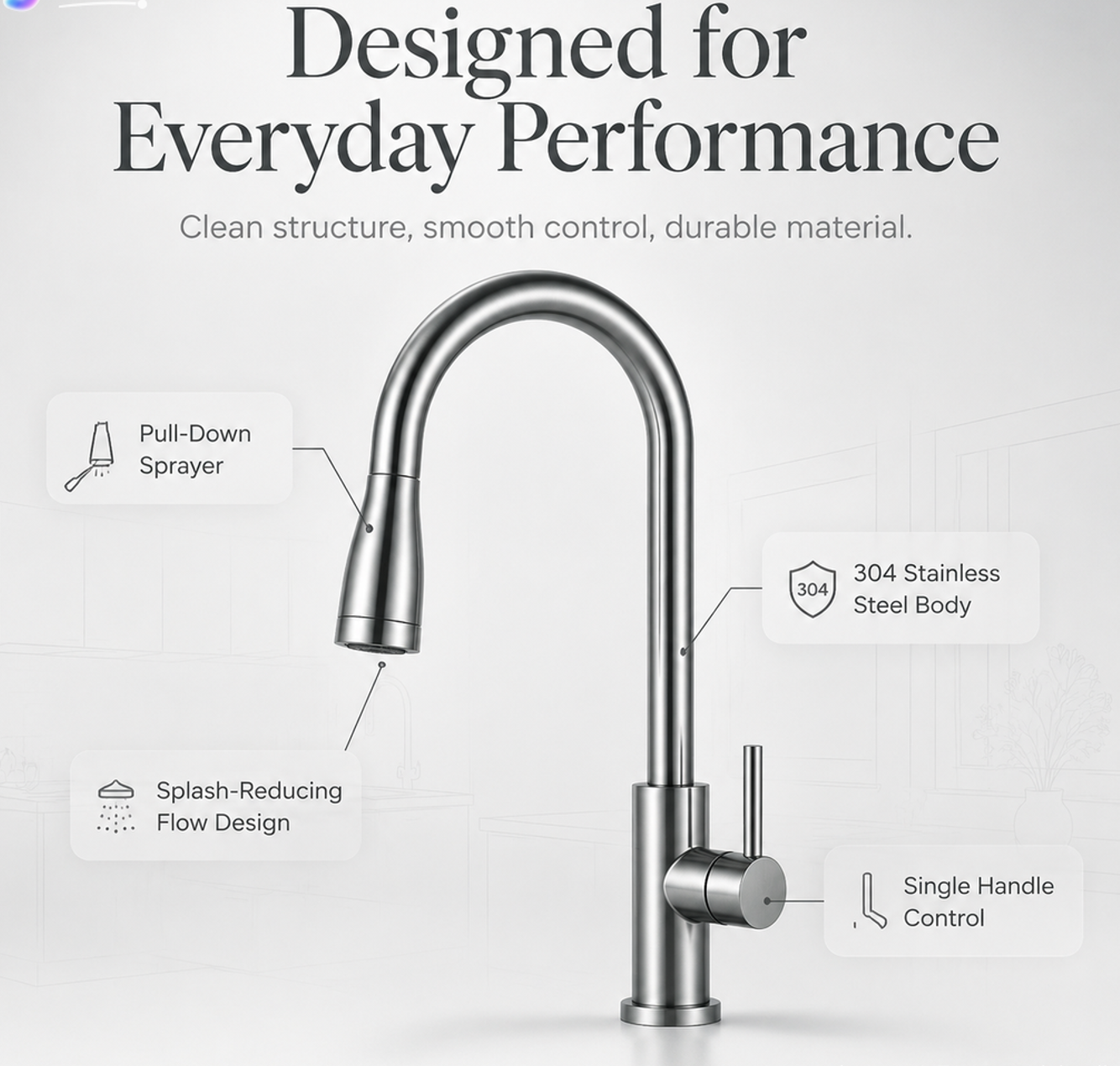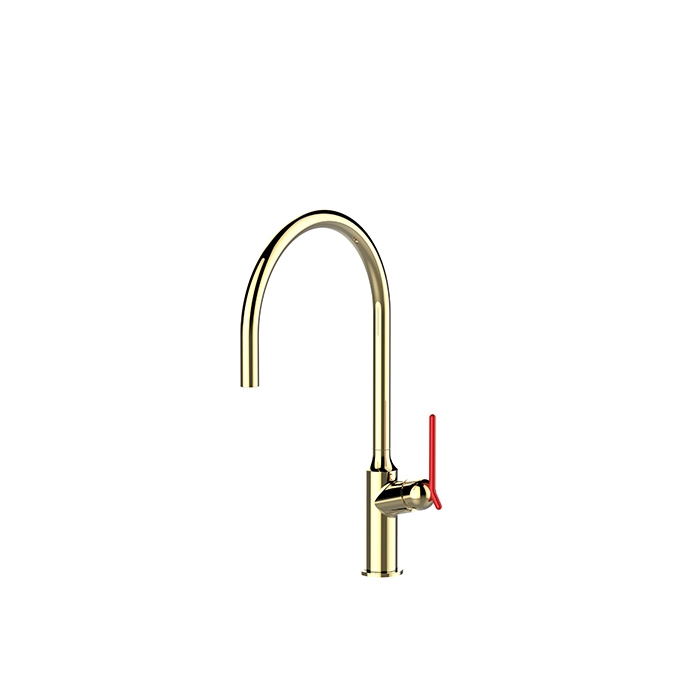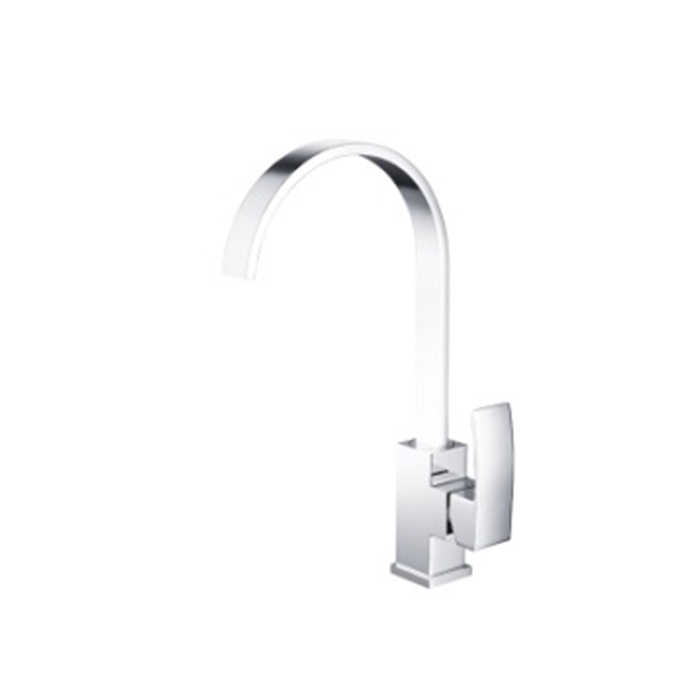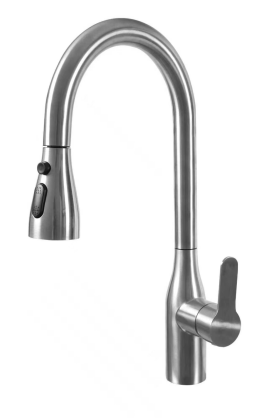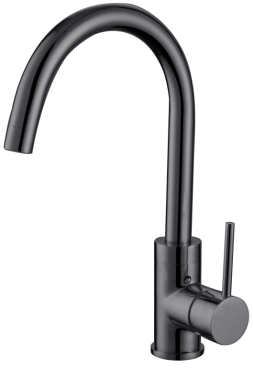
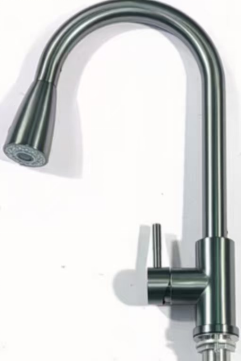
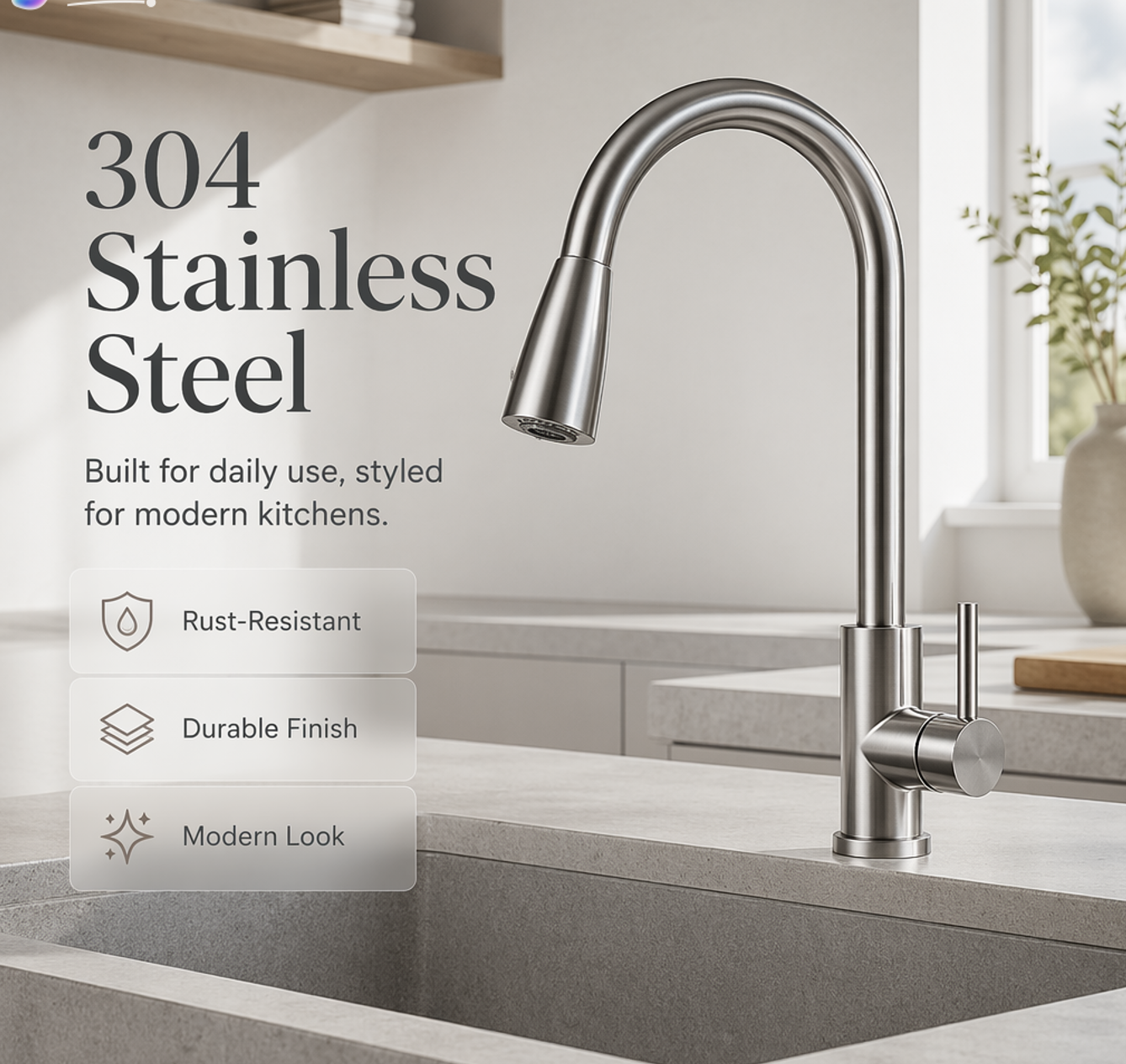
This single-lever mixer tap is a type of bathroom faucet that uses a single control lever to mix hot and cold water and adjust the flow rate. It is widely used in kitchens and bathrooms. Compared to traditional double-handle designs, this product offers advantages in ease of operation, compact structure, and overall consistency. This particular single-lever mixer tap features an L-shaped high-arc spout and a hollow handle design, balancing water height, tactile feel, and visual proportions. The main structure is made of solid metal, combined with various surface finish options to meet the needs of different spatial styles and project configurations, emphasizing design distinctiveness and long-term durability.


1. Smooth Operation
The Single Lever Mixer Tap features a high-precision ceramic valve core structure, with a tested opening and closing lifespan of over 500,000 cycles. During hot and cold water switching, the water temperature response time is controlled within 1 second, avoiding the inconvenience of frequent adjustments. Flow rate and water temperature can be controlled with a single hand, effectively reducing operational complexity and making daily water use more consistent and stable, suitable for long-term use in high-frequency switching environments.
2. Stable Water Flow
The internal flow channel of the L-shaped spout has been structurally optimized. Within the common water pressure range of 0.1 to 0.5 MPa, the water flow fluctuation is controlled within ±5%. The water outlet angle is stable, and the water flow is highly concentrated, effectively reducing splashing. The Single Lever Mixer Tap maintains uniform water flow even under continuous use, enhancing overall user comfort.
3. Reliable Materials
The main body is made of solid brass casting, with a stable copper content of over 59%, providing excellent pressure resistance and corrosion resistance. The product remains leak-free for 24 hours under a static pressure test of 1.6 MPa, ensuring structural integrity in complex water quality and long-term use environments, meeting the basic requirements of safety and durability for the Single Lever Mixer Tap.
4. Durable Surface
The surface treatment uses electroplating or spraying processes, with a film thickness controlled between 8 and 12 microns. After a 48-hour salt spray test, there is no significant oxidation, blistering, or peeling on the surface. This treatment effectively improves scratch resistance and corrosion resistance, allowing the Single Lever Mixer Tap to maintain long-term appearance stability in humid environments.
5. Universal Installation
The standard interface structure is compatible with countertop opening sizes of 32 to 35 mm, suitable for common sinks and countertop configurations. The base sealing structure has undergone anti-seepage testing, effectively reducing the risk of water accumulation on the countertop. The Single Lever Mixer Tap maintains consistent assembly stability under different installation conditions, reducing the frequency of future maintenance.
1. Home Kitchens
In a home kitchen setting, the Single Lever Mixer Tap meets various water needs, such as washing vegetables and cleaning dishes. The high-arc spout design provides ample space for large pots and pans, avoiding the need for frequent repositioning. The single-hand operation enhances daily efficiency, suitable for the high-frequency, continuous water usage typical in a home environment.
2. Commercial Kitchens
Commercial kitchens demand high levels of equipment stability and durability. The Single Lever Mixer Tap maintains a stable water flow under continuous use, helping to improve cleaning efficiency. Its reliable structure reduces the risk of operational interruptions due to faucet malfunctions, making it suitable for high-intensity use in commercial kitchens.
3. Public Washrooms
In office buildings or public washrooms, the single-lever operation of the Single Lever Mixer Tap reduces the number of contact points. Stable water temperature control improves the user experience, reduces the likelihood of complaints, and minimizes maintenance and replacement costs for facility managers.
4. Hotel Projects
Hotel projects typically emphasize consistency in overall bathroom design. Multiple color and surface finish options allow the Single Lever Mixer Tap to match different spatial design requirements. Its stable performance ensures long-term reliability even under high occupancy rates.
5. Apartment Complexes
In apartment projects, the Single Lever Mixer Tap's compact structure and small footprint make it suitable for mass installation. Standardized specifications facilitate centralized procurement and subsequent maintenance management, reducing overall operating costs while ensuring full functionality.
Regular cleaning: It is recommended to use a mild detergent and a soft rag to clean the Single Lever Mixer Tap once a week. The pH value of the detergent should be controlled between 6 and 8. Use a rag dipped in detergent to gently wipe the surface of the faucet in a circular motion, including the water outlet, handle and other parts, then rinse with clean water and wipe with a dry rag. This can effectively remove water stains, stains and dust, maintain the gloss and beauty of the faucet, and prevent dirt from accumulating for a long time and becoming difficult to clean.
Check for leaks: Check the faucet regularly every month to see if there is any leakage. You can judge by observing whether there is water droplets seeping out or water stains remaining at the bottom of the faucet, the joints and other locations. If a leak is found, check whether the seal is worn in time. The degree of wear of the seal can be judged by observing the surface smoothness and elasticity after disassembling the faucet. Generally, the seal may need to be replaced after 6-12 months of use to ensure the normal use of the faucet and avoid water waste.
Lubrication and maintenance: lubricate and maintain the moving parts of the faucet, such as the handle rotating shaft and the switch valve, every 3-6 months. You can use a small amount of food-grade lubricant and drip it on the rotating parts of the rotating shaft and the valve, then repeatedly open and close the faucet several times to evenly distribute the lubricant. This can reduce friction between parts, extend the service life of the faucet, and make the operation smoother.
Water quality maintenance: Since the Single Lever Mixer Tap is in direct contact with the water source, pay attention to the impact of water quality on the faucet. If the water quality in the area is hard, minerals such as calcium and magnesium in the water are easy to deposit inside the faucet to form scale. You can use a descaling agent to descale the inside of the faucet once every 3-4 months. According to the requirements of the descaling agent manual, pour an appropriate amount of descaling agent into the sink, turn on the faucet and let the water flow for a period of time, so that the descaling agent can fully dissolve the scale, and then rinse it clean. This can keep the inside of the faucet unobstructed and prevent scale from clogging and affecting the water flow.
Protective measures: When decorating or cleaning the kitchen, pay attention to protecting the Single Lever Mixer Tap. For example, when painting, polishing, etc., you can wrap the faucet with plastic film to prevent paint, detergents and other chemicals from splashing onto the faucet surface and causing corrosion or damage to it. At the same time, when carrying heavy objects or installing kitchen appliances, avoid colliding with the faucet to avoid deformation or damage.
Winter antifreeze: In the cold winter, if the kitchen temperature may be below 0℃, antifreeze measures need to be taken for the Single Lever Mixer Tap. Insulating materials such as foam insulation pipes can be used to wrap the water pipe part of the faucet to prevent the water in the water pipe from freezing and expanding, causing the water pipe to rupture. At the same time, when the faucet is not used for a long time, the faucet can be opened to let the water flow in a dripping state to reduce the water pressure in the water pipe and reduce the risk of freezing and cracking.
A: The hollow handle has undergone stress analysis during the design phase, and the critical stress areas maintain a complete thickness structure. Under normal use conditions, it will not affect the handling stability, and it also helps to reduce the overall weight, maintaining reliable performance during long-term use.
A: The surface treatment process supports multiple color schemes, and different colors meet standard requirements in terms of wear resistance and corrosion resistance. It is suitable for project-based procurement for unified configuration, and the color difference will not affect the performance.
A: The ceramic valve core has stable control capabilities for the hot and cold water ratio, and the water temperature changes smoothly under normal water pressure conditions. It is not prone to sudden changes in temperature during normal use, which helps to improve overall user comfort.
A: The product has undergone life cycle testing for high-frequency opening and closing scenarios during the design phase, and the key components have sufficient durability. As long as it is installed and used according to specifications, it can maintain a stable state under long-term high-frequency conditions.
A: The base and water inlet interface are equipped with sealing structures. As long as the countertop opening size meets the requirements and it is installed correctly, it can effectively prevent water leakage and reduce the impact on the countertop and cabinet structure.