
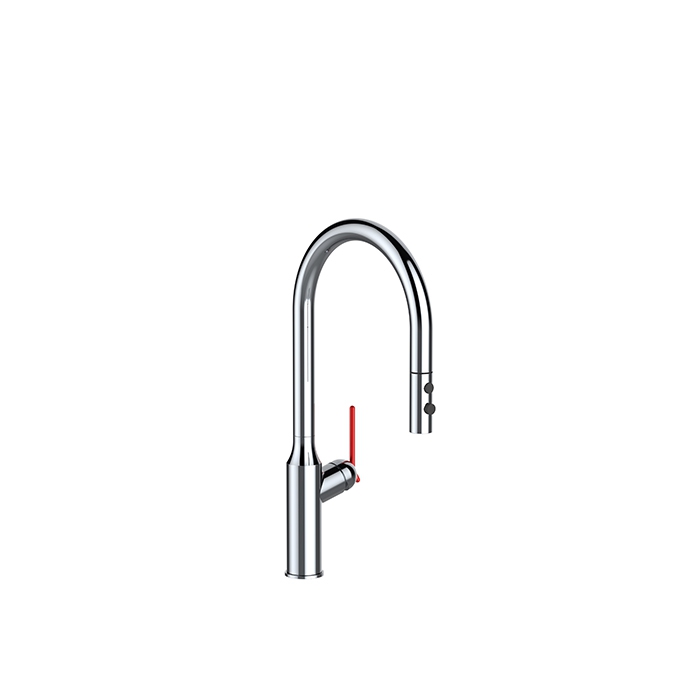
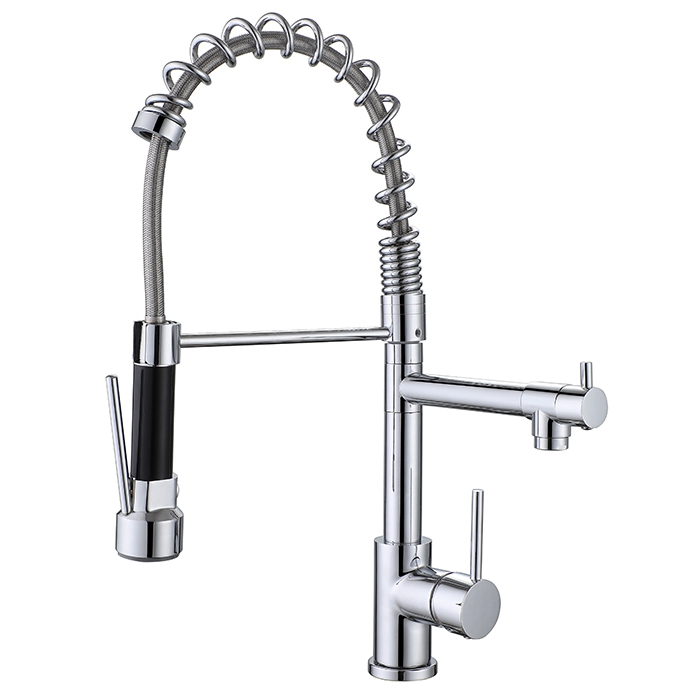
Pull Out and Spray Kitchen Taps are kitchen mixer taps that integrate a pull-out spout structure with multi-mode spray functions into a single faucet system. The body is typically made of solid brass with a polished chrome finish, ensuring structural stability while enhancing corrosion resistance. The single-handle control makes water volume and temperature adjustment more intuitive. The overall design balances operational efficiency, structural reliability, and aesthetic consistency, making it suitable for kitchen configurations that demand a higher level of functional integration.
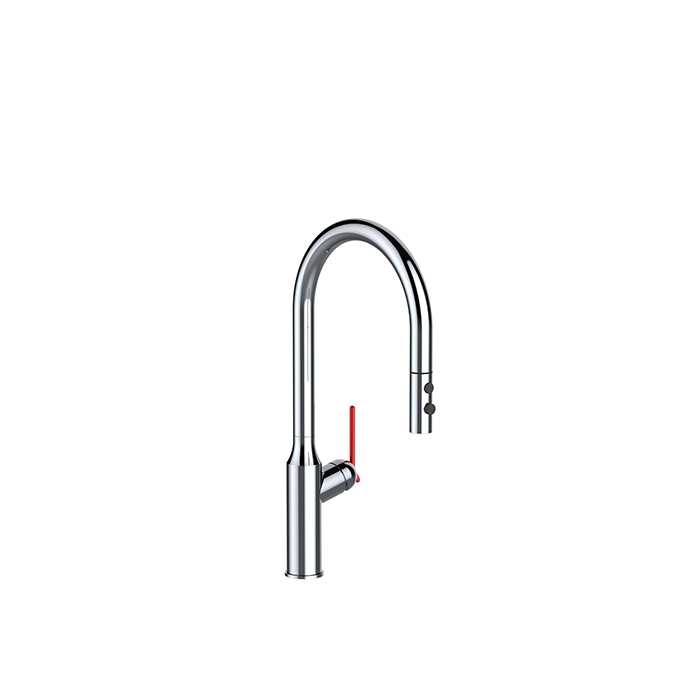
1. Flexible Pull-Out Function
Pull Out and Spray Kitchen Taps feature an extendable spout via a built-in wear-resistant pull-out hose, typically offering a pull-out range of 380 to 420 millimeters. The hose maintains smooth retraction under rated water pressure and retains stable return performance after no less than 20,000 stretching cycles, ensuring consistent operation during long-term use.
2. Controllable Spray
The spray head structure supports switching between direct stream and diffused spray modes. Under rated flow conditions, the water flow distribution uniformity deviation is controlled within 10 percent. The spray mode can quickly improve the washing efficiency per unit area, reduce the number of repeated rinses, and minimize water splashing.
3. Robust Body
The faucet body is made of high-density brass casting, with a copper content typically no less than 59 percent. It maintains overall structural stability under a standard water pressure of 0.6 MPa and is resistant to structural fatigue. The connection points are reinforced with thickened materials and multiple sealing structures, effectively reducing the risk of loosening during long-term use.
4. Durable Plating
The surface is treated with a polished chrome plating process, with a plating thickness generally controlled at 0.25 micrometers or more. It shows no significant corrosion after at least 48 hours of salt spray testing, maintaining surface integrity in high-humidity kitchen environments, reducing water stain adhesion, and improving daily cleaning efficiency.
5. Precise Control
The internal components include a high-quality ceramic valve core, tested for over 500,000 opening and closing cycles. Water volume and hot/cold mixing adjustments respond quickly, completing changes within approximately 0.1 seconds, helping to maintain stable water flow and reduce the probability of leaks.

1. Home Kitchens
Pull Out And Spray Kitchen Taps are suitable for daily tasks in home kitchens, such as washing vegetables, cleaning dishes, and sink maintenance. The pull-out and spray function reduces the need to frequently move containers or adjust posture, making the cleaning process smoother and improving overall kitchen efficiency and comfort.
2. Open Kitchens
In open-plan kitchen spaces, this type of faucet strikes a balance between functionality and visual appeal. The spray mode helps control the water flow range, reducing splashing onto countertops or floors during cleaning, maintaining the cleanliness of the shared space, and enhancing the overall user experience.
3. Large Sinks
For wide or deep sinks, the pull-out spray structure directs the water flow directly to the target area, avoiding the problem of insufficient coverage from fixed spouts. The flexible water delivery effectively reduces blind spots and improves overall sink rinsing coverage, making the cleaning process more efficient.
4. High-Frequency Use
In kitchens with high water usage frequency, the multi-functional water delivery structure shortens the time required for each cleaning task. The quick switching between spray and stream modes reduces the intensity of repetitive rinsing, making continuous operation easier and contributing to a stable experience even with frequent use.
5. Functional Upgrade
Pull Out And Spray Kitchen Taps are suitable as an upgrade solution for traditional kitchen faucets. The standardized installation interface offers high compatibility, allowing for replacement without altering the existing sink and countertop structure, thus improving the overall functionality and flexibility of the kitchen.

Regular cleaning: Perform a comprehensive cleaning at least once a week. Use a soft damp cloth dipped in a neutral detergent to gently wipe the surface of the faucet to remove dust, stains and scale. For stubborn scale, you can use a mixture of white vinegar and water in a 1:1 ratio, soak the cloth and wipe the scaled area, leave it for 15-20 minutes, then rinse with clean water. Avoid using rough cleaning tools or strong acid and alkaline cleaners to prevent scratching the surface or corroding parts, affecting the service life and appearance.
Regularly check the seals: Check the seals inside the faucet once a month to see if there is any aging, deformation or damage. If the seal is found to be slightly aged, a small amount of silicone grease can be applied for maintenance to enhance the sealing performance; if damaged, the seal of the same specification and material should be replaced in time to prevent water leakage and dripping, which will affect normal use. The general replacement cycle of the seal is 6-12 months, depending on the frequency of use and water quality.
Regular joint lubrication: lubricate and maintain the telescopic joints and rotating base of the faucet once a quarter. Use special food-grade lubricants, apply an appropriate amount to the active parts, and then repeatedly extend and rotate several times to evenly distribute the lubricant, reduce friction between metal parts, maintain the flexibility of extension and rotation, and extend the service life of mechanical parts. During operation, pay attention to avoid lubricants from entering the water outlet channel to avoid polluting the water quality.
Winter antifreeze treatment: In areas where the temperature is below 0℃ in winter, the faucet valve should be closed before going to bed every night, and the faucet should be opened to drain the residual water in the water pipe to prevent the low temperature from causing the accumulated water in the water pipe to freeze and expand, resulting in water pipe rupture and faucet damage. In extremely cold weather, you can use thermal insulation materials such as foam insulation pipes to wrap the faucet and water pipes to enhance the insulation effect. If you find that the faucet has been frozen, do not force it open. It should be thawed with warm water first, and then used normally after it is completely thawed to avoid damage to the internal structure due to external forces.
A: The pull-out system uses wear-resistant hoses and a stable return mechanism, resulting in a low probability of jamming under normal water pressure and usage conditions. Regular cleaning of the spout and keeping the hose unobstructed can further extend its lifespan.
A: The spray structure has been designed with flow balancing in mind. Water pressure fluctuations during mode switching are within a controllable range and will not significantly affect normal cleaning operations.
A: The polished chrome-plated surface has high density, resulting in a relatively low rate of water stain accumulation. Simple wiping after daily use is sufficient to maintain a clean appearance, without the need for additional complex maintenance.
A: Absolutely. They can operate normally under basic water pressure conditions, but the spray effect may vary depending on the water pressure. If the water pressure is low, it is recommended to use it with a pressure regulator or booster system.
A: The product usually comes with standard installation components, compatible with conventional countertop opening specifications. The installation process does not involve structural modifications, and can be completed using standard tools.


 Mobile Phone:
 Phone:
 Contact Now
 WeChat