
Choosing a bathtub faucet is not only about looks. The right set must match your tub structure, mounting surface, plumbing rough-in, and the way you actually use the bath. A faucet that is not matched to the tub style often causes practical issues such as splash outside the tub, uncomfortable reach, slow filling, hard-to-service valves, or installation rework that affects tile and waterproofing.
This guide breaks the decision into clear steps so you can choose confidently for freestanding tubs, alcove tubs, drop-in tubs, and other common layouts. If you want to compare different configurations while you decide, you can browse HAOJIAJIA’s range here: bathroom faucet.
Your bathtub style determines what faucet types are physically possible. Before looking at finishes and features, confirm where the faucet can be mounted.
Common bathtub styles and what they usually allow:
Freestanding tub
Most often paired with a floor standing tub filler. This keeps the tub deck clean and avoids cutting the tub rim. It also works well when the tub is set away from the wall.
Alcove tub with three walls
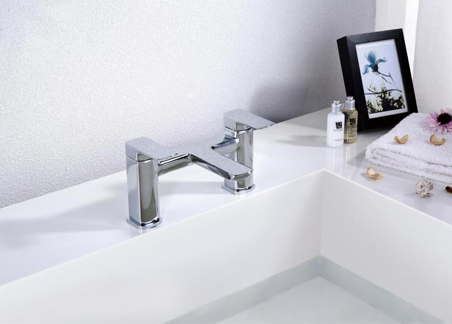
Most often paired with a wall-mounted spout and valve, or a deck-mounted faucet if there is a wide ledge. Because the tub sits against walls, reach and spout alignment matter more than for a freestanding tub.
Drop-in tub
Usually installed into a surround or platform deck. This style is ideal for deck-mounted tub faucets because the valve and plumbing can be serviced from the deck access area.
Corner tub
Often needs a deck-mount solution with careful spout reach planning because the tub interior shape may be farther from the deck edge than expected.
Walk-in tub
Usually benefits from simple, serviceable faucet layouts and a handheld shower option for rinsing and cleaning.
A fast way to avoid mistakes is to identify your mounting surface first:
Floor mounting only works when the plumbing can come up through the floor in the correct location.
Deck mounting needs enough flat deck area and a serviceable access path.
Wall mounting needs correct in-wall rough-in depth and waterproofing planning.
Once you know the tub style, choose the faucet mounting type that matches your bathroom construction. This choice affects installation cost and long-term service access.
Best match for freestanding tubs and open layouts. Key points:
The spout height must clear the tub rim comfortably.
The spout reach must land water into the tub basin, not onto the rim.
The base position must avoid conflict with the tub overflow, skirt, or cleaning access.
Best match for alcove tubs or tubs placed close to a wall. Key points:
Rough-in depth and final tile thickness must be planned so trim sits flush.
Spout projection must be long enough to reach the basin.
Valve access should be considered in case cartridge replacement is needed later.
Best match for drop-in tubs and platform decks. Key points:
Deck thickness and reinforcement matter because multi-piece sets apply torque at the handles and spout.
The handle spacing and hole layout must match the faucet set requirements.
Service access is essential. A beautiful deck without access can make future repair expensive.
If your tub style supports more than one mounting type, select based on your renovation scope. Full renovation often makes concealed and wall solutions easier. Quick upgrades often favor solutions that minimize wall opening.
Bathtub faucet sizing is mostly about geometry. Even a high-quality faucet can feel wrong if the reach and height are not aligned to the tub.
Measure these items before selecting a model:
Spout reach to the water landing point
Measure from the mounting point to the ideal water landing zone inside the tub. Aim for the stream to land inside the basin area, not directly on the tub wall, to reduce splash.
Spout height above the rim
For floor standing fillers, you need enough clearance to avoid the stream hitting the rim. For deck-mounted sets, the spout height should allow comfortable bucket filling if needed while still keeping the stream controlled.
Rim width and deck flat area
For deck-mount sets, confirm there is a flat area that can accept the base plate and seals. Curved rims often limit the usable footprint.
Handle clearance and user ergonomics
Make sure handles or lever travel will not hit the tub wall, backsplash, or window ledge.
Drain and overflow location
A faucet placed too close to the overflow can create awkward water patterns and increase splash.
A practical measurement record helps you compare options quickly:
| What to measure | Where to measure from | Why it matters |
|---|---|---|
| Spout reach | Mounting center to tub basin | Controls splash and usability |
| Spout height | Finished floor or deck to spout outlet | Prevents rim interference |
| Deck flat area | Usable flat zone on tub deck | Confirms deck-mount feasibility |
| Wall distance | Tub rim to finished wall surface | Affects wall spout projection |
| Clearance zone | Space around handles and spout | Prevents collision and poor ergonomics |
Bathtub faucets often include more than a spout. The right function package should match your bathing routine and household needs.
Common function choices:
Tub spout only
Suitable when you fill the tub and do not need rinsing or cleaning support from the faucet.
Tub spout plus handheld shower
Useful for rinsing the tub, washing hair, bathing children, and pet cleaning. It also helps when you want a more controlled rinse without relying on an overhead shower.
Multi-piece sets with separate controls
These can offer a more premium look and fine control, especially for deck-mounted installations. They also allow layout flexibility when the tub deck is large.
Digital temperature display options
Useful when you want more visible temperature feedback and a more premium user experience. Some HAOJIAJIA bathtub faucet sets integrate digital temperature display and ambient lighting as part of the design concept, which can support more intuitive control during bathing.
The best way to choose is to rank what matters most:
Faster tub filling
Easier temperature control
More convenient rinsing and cleaning
Minimal visual footprint
Easier service access
A bathtub faucet should feel smooth, stable, and predictable. These performance traits depend heavily on the valve core and the system design.
Key decision points:
Cartridge quality and cycle life
Faucets with ceramic valve cores are common because they can seal reliably and maintain smooth control. Some HAOJIAJIA faucet designs specify ceramic valve cores tested for high cycle durability, which supports long-term stable sealing in daily use environments.
Temperature control behavior
If your home has pressure changes when other taps run, a design that maintains stable mixing control becomes more valuable. This is especially important for family bathrooms and hospitality projects where user comfort and repeatable experience matter.
Access for future maintenance
Even excellent faucets need service over time. Choose configurations where cartridge replacement is possible without breaking tile or removing major structures. Deck-mounted sets should have an access panel plan. Concealed installations should have correct trim plate sealing and a service path.
Matching with local plumbing standards
Confirm inlet connection style, rough-in requirements, and local water pressure range compatibility before finalizing.
If you are sourcing for multiple units, selecting a consistent valve platform can simplify spare parts management and long-term maintenance.
Finish is not only aesthetic. It affects cleaning effort, water spot visibility, and how the surface holds up under daily use.
Material and finish considerations:
Corrosion resistance and long-term appearance
Bathrooms involve humidity, cleaning chemicals, and sometimes hard water. Materials such as stainless steel and high-quality copper alloy bodies are commonly chosen to improve durability in wet environments.
Finish durability and maintenance routine
Polished surfaces may show fingerprints and water spots more easily. Brushed finishes often hide minor marks better. If the bathroom is used by children or in high-traffic environments, ease of maintenance becomes a practical selection factor.
Consistency across the room
Choose a finish that matches the shower set, accessories, and drain hardware. Consistent finish tone can elevate the overall bathroom perception more than one premium faucet alone.
When selecting from a product range, it helps to compare finish options side by side under the same lighting, because bathroom lighting and wall color can shift how a finish looks.
When choosing a faucet supplier, buyers often focus on one model photo. For projects, the bigger value is stable manufacturing, clear specifications, and the ability to match different installation types without changing quality level.
HAOJIAJIA positions itself as a manufacturer integrating research and development, production, and sales for faucets and bathroom hardware accessories. This type of structure typically supports consistent product development, controlled production processes, and a wider range of compatible bathroom fixtures for coordinated supply.
For bathtub faucet selection specifically, HAOJIAJIA’s product range includes multiple bathtub faucet configurations, including multi-piece bathtub sets and floor standing bath faucet styles, which can help match different bathtub layouts and renovation scopes without forcing a compromise on style direction.
To review configurations that align with different tub styles and installation types, you can start from the category page: bathroom faucet.
Exposed design, concealed design, deck-mounted sets, and floor standing fillers can all be the right choice when they match the bathtub style and the bathroom build condition. The most reliable selection process is to identify your tub style and mounting surface first, then confirm the mounting type, measure spout reach and height to prevent splash, and choose functions that reflect real bathing habits. After that, focus on valve durability, service access, and finish suitability for your water conditions and cleaning routine.
When these factors align, the faucet will not only look right but also fill efficiently, control temperature smoothly, and stay easier to maintain for years. And when you choose from a supplier with stable production capability and a clear product range, it becomes easier to keep specifications consistent across projects and upgrades.

 Mobile Phone:
 Phone:
 Contact Now