
Installing a pull out kitchen faucet is not just a simple swap of fixtures. Because this type of faucet combines a retractable hose, spray head, and internal weight system, the installation logic is different from that of a standard fixed-spout faucet. A clear understanding of the workflow helps avoid common issues such as poor hose retraction, unstable mounting, or hidden leaks. This guide explains how to install a pull out kitchen faucet in a practical, step-by-step manner, suitable for residential kitchens using modern faucet designs such as those in the HAOJIAJIA pull out kitchen faucet series.
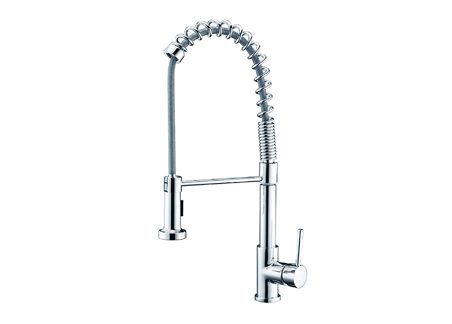
A pull out kitchen faucet integrates movement into the spout itself. Water flows through a flexible hose housed inside the faucet body, allowing the spray head to extend and retract as needed. This design improves reach and rinsing efficiency, but it also introduces moving parts that must be installed with care.
Unlike traditional faucets, installation success depends not only on sealing water connections, but also on ensuring that the hose path is unobstructed and balanced. Any interference under the sink can affect daily operation, making early planning especially important.
Before installation begins, confirm that the sink and cabinet provide adequate space for a pull out faucet system. Clearance under the sink is often overlooked and can cause problems later.
Key checks include:
A single mounting hole of appropriate diameter
Sufficient vertical space for hose movement
No sharp edges or obstacles below the sink
If the cabinet contains cleaning supplies, pipes, or filtration units, these may need to be repositioned to allow the hose and counterweight to move freely.
The old faucet must be fully removed before installing the new one. After shutting off the water supply, disconnect the hot and cold supply lines and loosen the mounting hardware from beneath the sink.
Once removed, clean the sink surface thoroughly. Mineral residue or debris around the mounting hole can prevent the new faucet from sitting flat, which may lead to movement over time. A clean surface improves both stability and appearance after installation.
The faucet body is installed from the top of the sink, with supply lines and the pull out hose feeding downward through the mounting hole. This step defines the final orientation of the faucet.
When positioning the faucet:
Align the spout toward the center of the sink basin
Ensure the base gasket sits evenly on the sink surface
Hold the faucet steady while securing it from below
Proper alignment at this stage prevents rotational looseness during everyday use.
From beneath the sink, the faucet is secured using a mounting bracket or nut. This component must be tightened evenly to prevent tilting.
After securing the body:
Connect the hot and cold supply lines to the shutoff valves
Tighten connections gradually to protect seals
Keep supply hoses naturally curved, not twisted
Many modern faucets, including those designed by HAOJIAJIA, use pre-attached flexible supply lines to simplify this step and reduce installation errors.
The pull out hose is fed through the faucet body and connected to the spray head. After connection, the counterweight is attached to the hose at a specified distance below the faucet.
Correct hose routing is essential:
The hose should hang vertically without sharp bends
The weight must not rest against pipes or cabinet walls
Movement should feel smooth when pulled and released
Incorrect placement can cause the spray head to retract slowly or unevenly.
Before declaring the installation complete, the faucet should be tested under real operating conditions. Turn the water supply back on gradually and observe all connection points.
Testing should cover:
Hot and cold water flow
Switching between spray modes
Hose extension and retraction under pressure
Any signs of dripping beneath the sink
If issues appear, they should be corrected immediately while access is still easy.
A well-installed pull out kitchen faucet requires minimal maintenance, but regular checks help preserve smooth operation.
Recommended habits include:
Avoid pulling the spray head sideways with force
Periodically clean the spray head to prevent scale buildup
Check hose movement during routine cabinet cleaning
Tighten mounting hardware if slight movement develops
Pull out kitchen faucets with robust internal guidance systems, such as those found in the HAOJIAJIA pull out kitchen faucet collection, are designed to maintain stable performance with routine care.
Installing a pull out kitchen faucet involves more than connecting water lines. Success depends on proper planning, stable mounting, correct hose routing, and careful testing. By following a structured installation approach and paying attention to under-sink clearance and hose movement, users can achieve smooth operation and long-term reliability. When installed correctly, a pull out kitchen faucet becomes a practical, efficient tool that enhances everyday kitchen tasks without added complexity.

 Mobile Phone:
 Phone:
 Contact Now