
Installing a freestanding bathtub faucet is a key step in completing a modern bathroom design. Unlike wall-mounted or deck-mounted faucets, freestanding bathtub faucets require precise positioning, solid anchoring, and careful water-line connections from the floor. When installed correctly, they provide stable performance, smooth water delivery, and a clean visual presence beside the tub. This guide explains how to install a freestanding bathtub faucet step by step, focusing on preparation, alignment, and long-term reliability. The process described here applies to standard floor-mounted models, including designs similar to those in the HAOJIAJIA freestanding bathtub faucet collection.
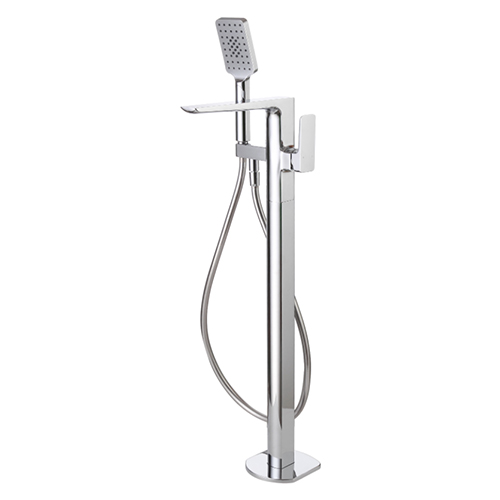
A freestanding bathtub faucet is supplied with water from pipes that rise vertically through the floor. These pipes connect to the faucet body through a concealed base or mounting kit. Unlike wall-mounted systems, the faucet must support its own weight and resist lateral movement caused by regular use.
Key structural elements include:
Floor-mounted water inlet pipes
A fixing base or mounting bracket anchored to the floor
Flexible or rigid internal connectors
The visible faucet column and spout
Because the faucet is fully exposed, both mechanical stability and visual alignment are critical during installation.
Before any installation begins, the faucet position must be carefully planned. Improper placement can cause water to miss the tub or interfere with user movement.
General positioning guidelines:
The faucet should align with the tub overflow or center line
Horizontal distance from tub edge is usually 150–250 mm
Vertical height should allow comfortable water flow without splashing
It is recommended to confirm the exact dimensions of the bathtub and faucet before fixing any components permanently.
Floor-mounted faucets require water lines to be installed before flooring is completed or accessed through a removable panel.
Preparation steps typically include:
Confirming hot and cold supply orientation
Ensuring pipe ends are cut to the correct height
Securing pipes firmly to prevent movement
Flushing lines to remove debris before connection
Water supply stability is essential, as movement beneath the floor can transfer vibration to the faucet body above.
The mounting base is what gives the freestanding faucet its stability. This component is fixed directly to the structural floor, not just the surface finish.
During this stage:
The mounting base is positioned over the supply pipes
Anchor bolts are secured into concrete or reinforced subfloor
The base is leveled carefully to prevent tilt
Waterproof sealing is applied where required
A properly installed base ensures the faucet remains upright and stable throughout long-term use.
Once the base is secured, the faucet body can be connected to the water supply. Most freestanding faucets use internal connectors that remain hidden within the column.
Important checks during connection:
Hot and cold lines are correctly matched
Seals or washers are seated properly
Connections are tightened evenly without overtightening
After connection, the faucet body is lowered onto the mounting base and fixed in place according to the manufacturer’s instructions.
After the faucet is connected, final alignment and sealing are completed. This step affects both appearance and durability.
Tasks at this stage include:
Adjusting the faucet so it stands perfectly vertical
Tightening fixing screws or collars
Applying sealant at the base if required
Cleaning excess sealant for a neat finish
Freestanding faucets designed with reinforced bases, such as those commonly found in the HAOJIAJIA floor-standing bathtub faucet range, are engineered to maintain alignment without frequent readjustment.
Before the installation is considered complete, the system must be tested thoroughly.
Testing should include:
Gradually turning on the water supply
Checking all internal connections for leaks
Running both hot and cold water
Observing water flow direction into the tub
Any leaks should be addressed immediately before the area around the faucet is closed or finished.
Proper installation supports long-term performance, but routine checks help maintain stability.
Recommended practices:
Periodically check base tightness
Avoid applying side pressure to the faucet
Clean the surface to prevent mineral buildup
Inspect seals during routine bathroom maintenance
Freestanding bathtub faucets built with durable internal structures and solid mounting systems are less prone to loosening or internal wear over time.
Installing a freestanding bathtub faucet requires careful planning, accurate positioning, and secure floor anchoring. By preparing the water supply correctly, fixing the mounting base firmly, and aligning the faucet body precisely, users can achieve a stable and visually refined result. While the process involves more steps than standard wall-mounted faucets, a properly installed freestanding faucet delivers both functional reliability and design impact. For those selecting modern floor-mounted designs, the HAOJIAJIA freestanding bathtub faucet series reflects installation-friendly structures that support long-term use without unnecessary complexity.

 Mobile Phone:
 Phone:
 Contact Now