

A leaky faucet is one of the most common household problems—annoying, wasteful, and surprisingly easy to fix. When you have a two-handle faucet, the leak usually comes from worn-out washers, O-rings, or valve seats inside one of the handles. Whether it’s a slow drip or a constant trickle, addressing the problem early saves water, prevents corrosion, and restores smooth operation.
This detailed guide explains how to fix a leaky two-handle faucet, step by step, and highlights how high-quality faucets such as those from HAOJIAJIA are designed to reduce maintenance issues through superior engineering.
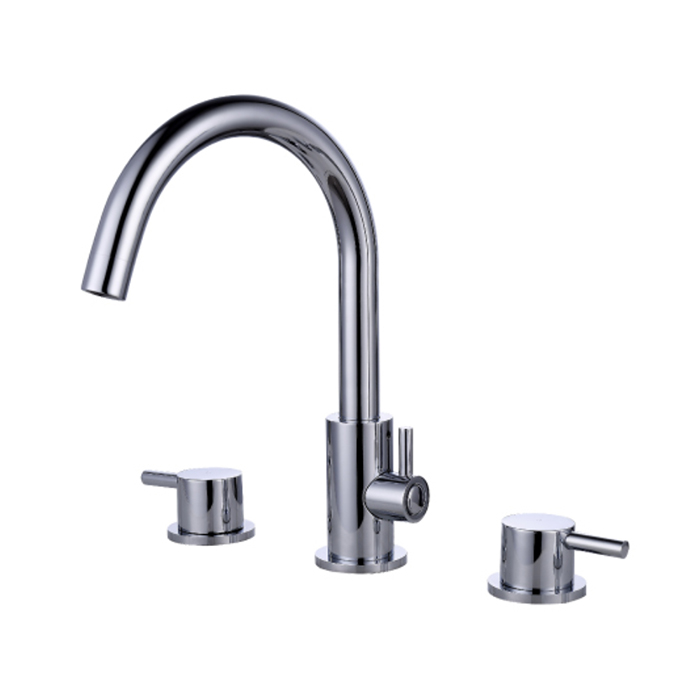
Before grabbing your tools, you need to identify where the water is leaking from. In a two-handle faucet, the leak typically originates from one of the following points:
| Leak Location | Possible Cause | Explanation |
|---|---|---|
| From the spout | Worn washer or valve seat | The rubber washer inside the valve no longer seals properly. |
| From the base of the handle | Damaged O-ring | The small rubber ring around the stem deteriorates or becomes loose. |
| Under the sink | Loose connection or supply line leak | The nuts or hoses connecting to the faucet body may need tightening. |
If the leak occurs only when you turn on the hot handle, the problem lies in the hot water valve; the same applies for the cold side.
To confirm:
Shut off one water supply at a time.
If the leak stops, you’ve found the faulty handle.
Over time, the internal seals and cartridges wear down due to:
Constant temperature changes (expansion and contraction).
Mineral buildup from hard water.
Friction between metal components.
Modern HAOJIAJIA faucets are designed with precision ceramic cartridges that eliminate these traditional problems, extending the lifespan of both handles and internal seals.
Prepare everything before starting the repair to make the process smooth and efficient.
| Tools | Materials |
|---|---|
| Adjustable wrench | Replacement washers or cartridges |
| Screwdriver (flat and Phillips) | O-rings (sized to your faucet model) |
| Allen key (for handle screws) | Plumber’s grease |
| Utility knife | Teflon tape |
| Towels or rags | Vinegar solution (for cleaning buildup) |
Tip: Always use parts designed for your specific faucet model. If you own a HAOJIAJIA faucet, consult the included product manual or customer service to confirm the correct cartridge or O-ring size.
Locate the hot and cold shut-off valves under the sink.
Turn both clockwise until tight.
Open both faucet handles to release any remaining water pressure.
Use a rubber stopper or rag to block the drain.
This prevents small screws or washers from accidentally falling into the sink.
Pry off decorative caps (if any) using a small flat screwdriver.
Use an Allen key or screwdriver to loosen the handle screws.
Gently lift the handles off the faucet body.
Tip: Keep the screws and caps organized so they can be reinstalled later.
Once the handle is off, you’ll see the valve stem (for compression-type faucets) or cartridge (for ceramic-disc faucets).
Use an adjustable wrench to unscrew the retaining nut.
Carefully pull out the valve stem or cartridge.
If the parts are stuck, wiggle gently instead of forcing them—some may be secured with mineral deposits.
Examine the removed parts closely:
| Component | What to Check | Common Problems |
|---|---|---|
| Washer | Look for cracks or flattening | Worn washer causes dripping. |
| O-ring | Check elasticity | Dry or cracked O-ring leaks at handle base. |
| Cartridge | Ensure smooth rotation | Mineral buildup or internal crack leads to leaks. |
If any part shows wear or damage, replace it with a new one of the same size and type.
Use a cloth or toothbrush dipped in vinegar solution to remove:
Lime deposits
Rust
Soap residue
Wipe clean and dry thoroughly. A smooth surface ensures proper sealing when reassembling.
Apply a small amount of plumber’s grease to the O-rings and threads.
Insert the new washer or cartridge into the faucet body.
Tighten the retaining nut securely but avoid over-tightening.
Reattach handles and secure them with screws.
Turn on the water supply slowly.
Check for leaks at both handles and the spout.
If the leak persists, double-check that all parts are properly seated and tightened.
Once fixed, turn the handles several times to ensure smooth operation and steady flow.
Not all two-handle faucets are the same. Knowing your faucet type helps determine the right repair method.
| Faucet Type | Identification | Repair Approach |
|---|---|---|
| Compression Faucet | Separate hot/cold handles that tighten down to stop flow | Replace washers and O-rings. |
| Cartridge Faucet | Smooth handle movement with ceramic or plastic cartridge inside | Replace entire cartridge unit. |
| Ball Faucet (less common) | Spherical valve mechanism inside body | Replace seals or ball assembly. |
| Ceramic Disc Faucet | Two rotating ceramic discs control flow | Replace cartridge and clean disc seat. |
HAOJIAJIA’s concealed Basin Faucets feature ceramic-disc cartridges, engineered for leak resistance and smooth control. Unlike compression-style faucets, they use durable ceramic plates that seal tightly without rubber washers, minimizing maintenance.
A repaired faucet can stay leak-free for years with proper care and routine checks. Follow these best practices:
Hard water causes mineral buildup around seals. Clean faucet components monthly using:
A vinegar and water solution to dissolve calcium.
A soft cloth (avoid abrasive pads that scratch finishes).
Avoid turning handles too tightly; it wears out internal components faster. Ceramic cartridges in HAOJIAJIA faucets need only a light twist to close fully.
Even the best components have a lifespan:
Washers/O-rings: every 2–3 years (if rubber-based).
Cartridges: every 5–10 years depending on usage and water quality.
Cheap faucets often leak prematurely due to inferior seals. Investing in a premium-grade faucet, like those from HAOJIAJIA, ensures:
Precision engineering
Durable brass construction
Leak-proof ceramic technology
Easy access to replacement parts
Sometimes, leaks persist even after replacing parts. Use this quick reference table to diagnose and correct remaining issues.
| Symptom | Likely Cause | Solution |
|---|---|---|
| Leak continues after new washer installed | Worn valve seat | Replace or regrind seat with seat wrench. |
| Handle hard to turn | Mineral buildup | Clean with vinegar or replace cartridge. |
| Drip occurs only on hot side | Faulty hot water cartridge | Replace hot side cartridge. |
| Water leaks around handle base | Damaged O-ring | Replace O-ring and apply plumber’s grease. |
| Uneven water flow | Debris in aerator | Remove and rinse aerator under running water. |
HAOJIAJIA’s two-handle concealed faucets are built to eliminate the common causes of leaks. Their advanced production technology and precision assembly ensure long-lasting performance.
| Feature | Benefit |
|---|---|
| High-Quality Brass Body | Corrosion-resistant and durable for daily use. |
| Ceramic Cartridge System | Provides drip-free performance for years. |
| Professional Design Team | Ergonomic handle structure for effortless control. |
| Advanced Production Equipment | Ensures precise tolerance and perfect water sealing. |
| Elegant Modern Look | Complements contemporary bathrooms with minimalist design. |
Each faucet is tested for pressure resistance, temperature durability, and sealing performance before leaving the factory—helping homeowners avoid leaks and unnecessary maintenance.
Fixing a leaky two-handle faucet is a simple process that requires only basic tools, patience, and attention to detail. By identifying the leak source, replacing worn parts, and cleaning the valve seats, you can stop drips and restore full functionality.
However, prevention is even better than repair. Choosing a high-quality concealed faucet from HAOJIAJIA means fewer leaks, longer lifespan, and smoother performance. Engineered with premium materials and advanced technology, HAOJIAJIA faucets deliver both elegance and reliability—making them a lasting investment for your home or commercial space.

 Mobile Phone:
 Phone:
 Contact Now